Greece
Online travel guide for your holidays in Greece
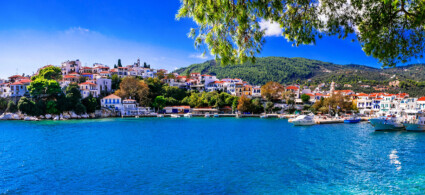
Blue and white: these are the colours of the clean sea and the waves, of small houses perched on a hillside sloping down to the beach, and not surprisingly also those of a flag, that of Greece, one of the destinations always at the top of the list of most popular holiday destinations for tourists.
For many it is a true paradise, the dream that gives the energy to endure a year of fatigue and stress, caught up in a thousand daily commitments. Then the holidays finally arrive, and you can dive into an incredibly blue sea, admire breathtaking sunsets, enjoy exquisite dinners in a traditional taverna and stay up late chatting with the friendly and joyful locals… or for those with more energy, dance until morning in a beach club.
A holiday in Greece is always a journey of epic proportions, even when all the days are a lazy ritual of naps in the sun and swimming: whether you are in the capital, on an island or in a little-known inland town, the myth is on your doorstep in the form of a perfectly preserved thousand-year-old temple, the evocative ruins of an ancient city, a prestigious museum that preserves the first great artistic masterpieces of mankind.
There is another reason why Greece enchants everyone – couples on a romantic getaway, young people looking for unbridled fun, lovers of art and ancient history, people eager for rest and relaxation, families wanting a stress-free holiday in a magnificent place – and it’s simple: Greeks love to live, and their joviality makes one appreciate even more the many attractions of this wonderful country.
Organising a trip to Greece is easy because tourism is now developed in all areas of the country, with few exceptions; there are hotels and flats to suit all needs, plenty of flights and ferries to get to your favourite places. Don’t put it off, you deserve a great holiday!
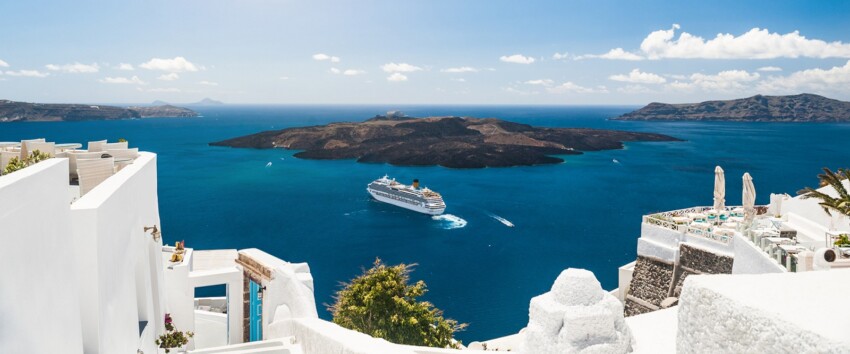
With the exception of some mountainous areas in the country’s interior, Greece (mainland and islands) enjoys a typical Mediterranean climate characterised by mild winters and hot summers; in seaside areas the high summer temperatures are mitigated by the wind.
The best time to go to Greece is certainly summer, but if you have the chance, avoid July and August, the busiest and most expensive months, and travel in June or September. In some cases it is even possible to go swimming in October, but seasonal flights are no longer in service at this time.
Most travellers choose Greece for its sea or for its rich historical and artistic heritage. But is it better to go to the islands or stay on the mainland? And if one chooses islands, is it better to go to a large and well-known one or a small and little-visited one?
With its scenic and cultural wonders, Greece is able to please everyone. Here are the places not to be missed in Greece.
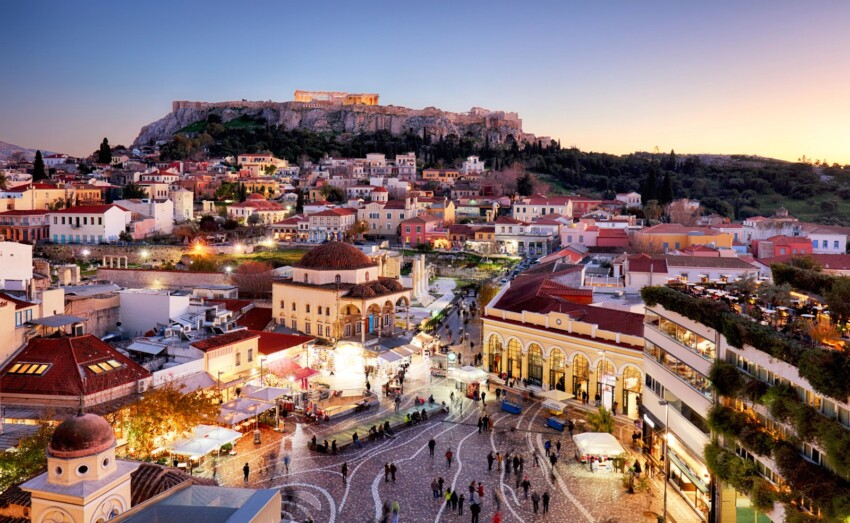
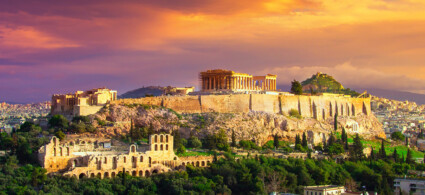
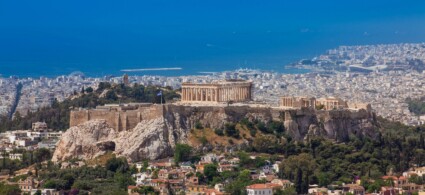
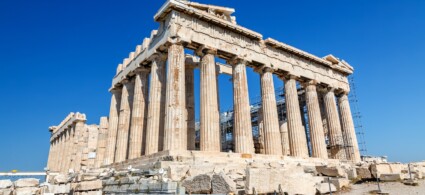
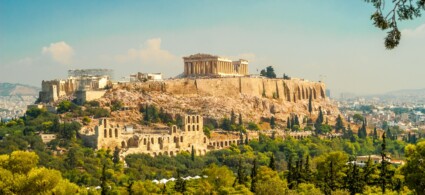
The Acropolis with the Parthenon is enough to make Athens a must-visit destination at least once in a lifetime: it’s a magnificent sight, unique in the world. But Athens is not only the perfection and harmony of classical art: it is also the buzz and dynamism of street art, rock festivals and trendy clubs.
Athens is a multifaceted metropolis that will fascinate you with its unmissable museums and archaeological sites, noisy taverns, romantic sunsets from the hills, modern quarters and – why not? – fabulous day trips.
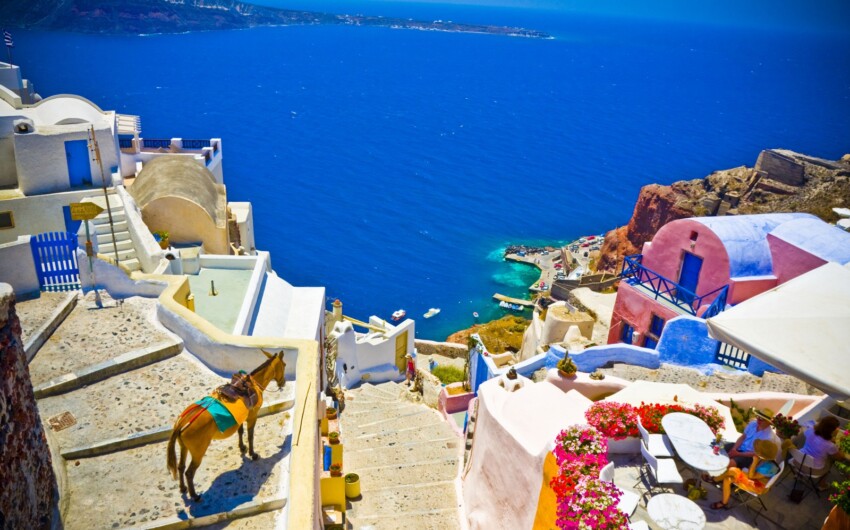
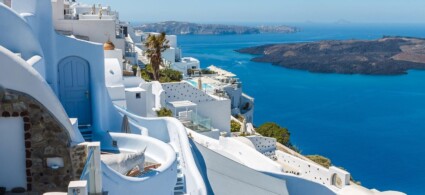
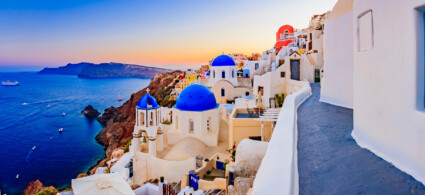
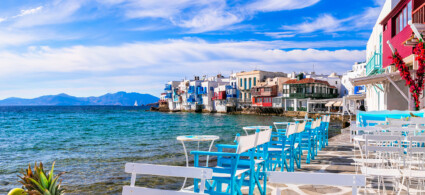
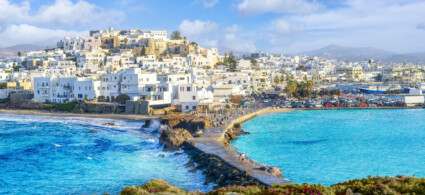
The Cyclades islands are picture-postcard Greece, or Greece as we imagine it: a land kissed by a generous sun and a sea with beautiful blue and azure hues, white houses with blue balconies and a lonely little church on top of a hill.
In fact, each island is a world of its own: Santorini is the glamorous destination par excellence, Mykonos the most transgressive, Milos the most loved by those who want to avoid the more touristy islands, Ios a mix of tradition and nightlife, and then Paros, Naxos, Anafi, Amorgos and others yet to be discovered!
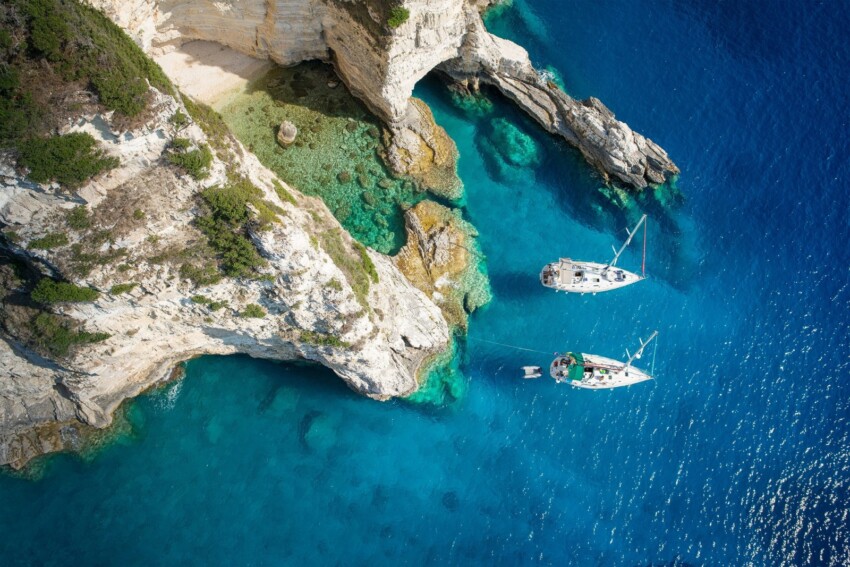
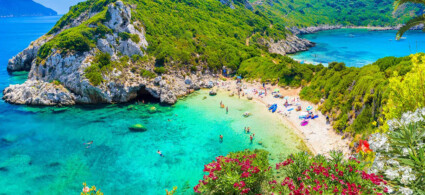
The Ionian Islands are easy to reach as they are the closest to Western Europe. A geographical proximity but also a cultural one: the Ionian Islands are in fact the Greek islands where Venetian domination left its clearest traces.
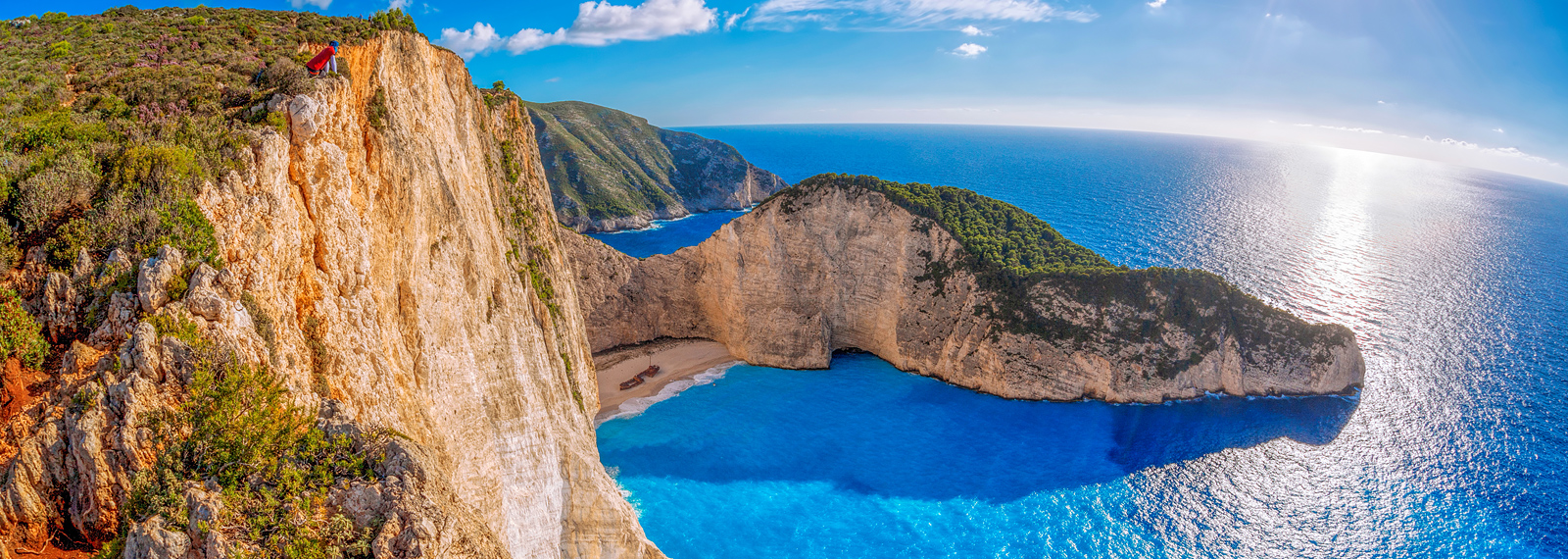
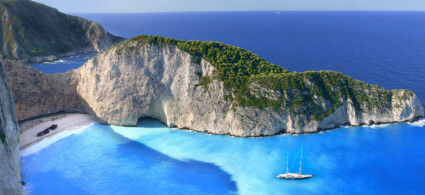
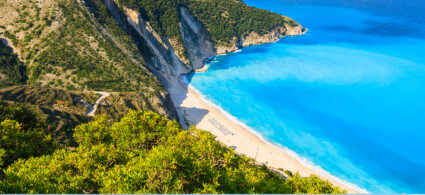
Corfu is the largest and best known, and the one with the most accommodation; also beautiful are Zakynthos, the island of the poet and the iconic wreck beach, Ithaca, the mythical island of Ulysses, the exclusive Paxos and the lesser-known Kefalonia, Lefkas and Kythira.
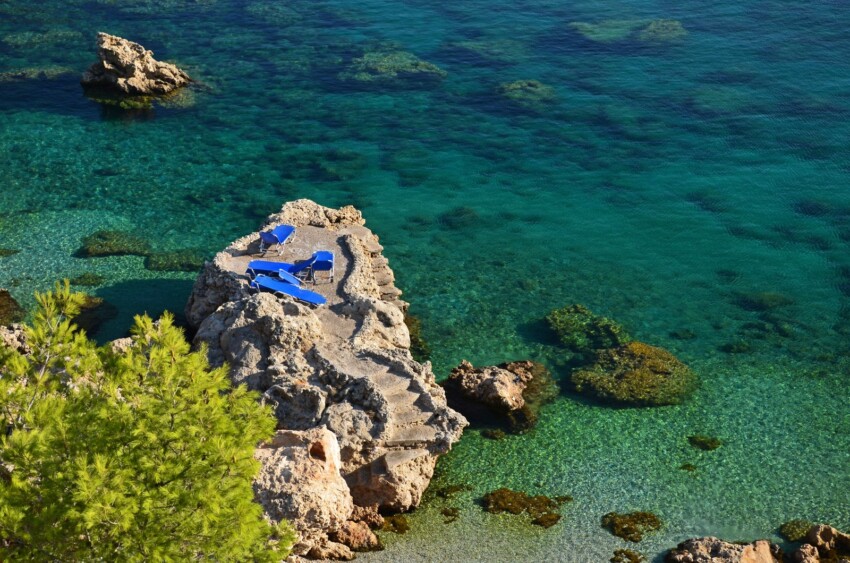
Crete is a record-breaking island: the largest Greek island, the southernmost and for many the most beautiful. Its size and the variety of its attractions make it an ideal destination for holidays combining sea, nature and culture. Crete’s top attractions are its enchanting beaches and the Palace of Knossos (the mythical palace of the Minotaur), but the list of things to see is long and includes archaeological museums, lagoons, palm groves and mountain trails.
Also not to be missed are some beautiful islands of the Dodecanese – the archipelago furthest away from the rest of Europe – such as the beautiful Rhodes, Kos and Karpathos; Skiathos and Skopelos in the Sporades; and Samos in the North Aegean.
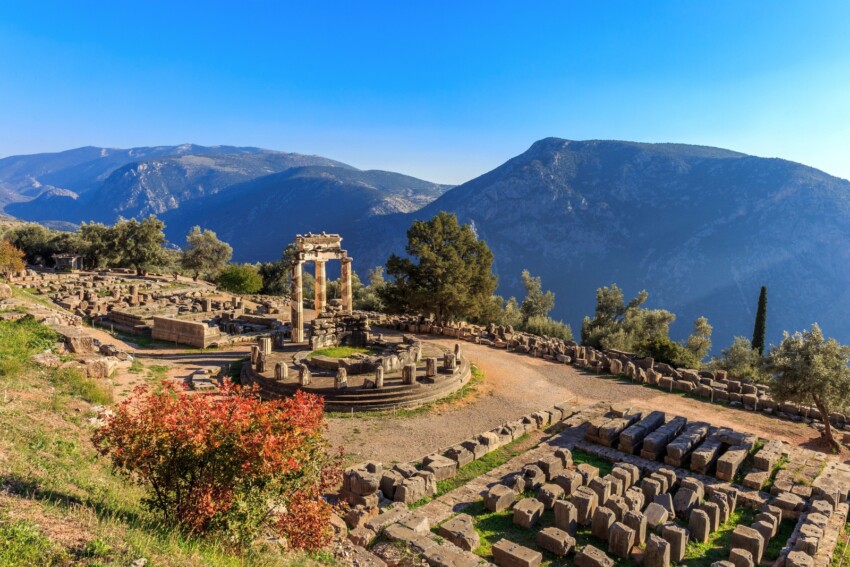
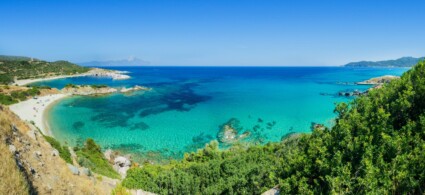
Mainland Greece is a very good alternative to the islands, equally fascinating but less visited and much cheaper. The sea is the same, blue and clean; wonderful beaches can be found both in the east, particularly on the Chalkidiki Peninsula, and in the west.
Archaeological sites abound a little all over Greece, but if you only have time for one or two, aim for Delphi and Olympia. An unusual attraction is the Meteora complex, six ancient monasteries perched atop imposing sandstone towers.
The easiest way to get to Greece is by plane: numerous low-cost flights connect our country to Athens and the main islands. Mykonos, Santorini, Rhodes and Corfu are the Greek islands served by the most flights.
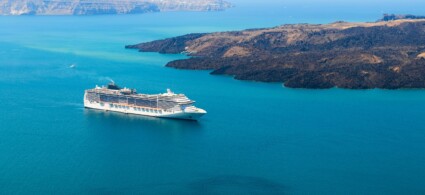
The Ionian Islands can also be reached comfortably by cruise, with ships departing from major European ports.
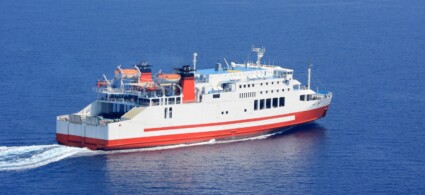
To reach the other islands, you will have to plan for at least one change: for many destinations, the easiest solution is to fly to Athens and take a ferry from the port of Piraeus (or a domestic flight, but it usually costs more). Another important port in Greece from where ferries leave for all or most of the islands is Igoumenitsa.
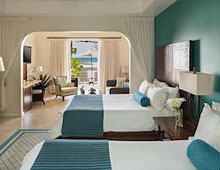
Greece is a very hospitable land, and by this we mean both their welcoming and jovial people and the wide offer of accommodation for all budgets. Hotels and flats in Greece really do cater for everyone’s needs, with establishments ranging from the lowest cost to the most unbridled luxury.
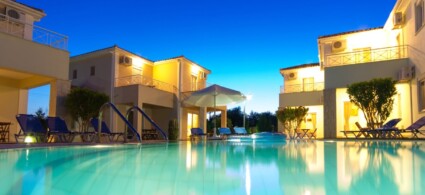
Depending on your budget and the type of holiday you want to take, you can choose to sleep in large resorts with swimming pools, private beach, garden and numerous other amenities and services or in studios and simple guesthouses. Studios are typical for the islands, especially the Cyclades, and are the best compromise between price, comfort and charm.
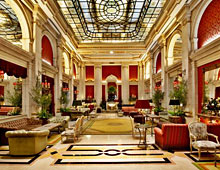
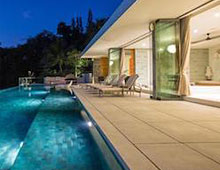
For something special treat yourself to a 4- or 5-star hotel with an infinity pool or better still a private pool, if you are travelling as a family choose the comfort of a holiday village.
The calling code for Greece is +30: to call a Greek number from home you need to dial 0030 before the recipient’s number. To call from Greece back home, on the other hand, you need to add the country code.
Greece follows the GMT+2 time zone, which is two hours above the Greenwich Zero Meridian, which is one hour more than Western Europe.
Greece is located in south-eastern Europe. Mainland Greece borders four European countries (Albania, North Macedonia, Bulgaria, Turkey) to the north and north-east, while to the south, east and west it has no land borders.
The islands that fall under Greek territory cover a vast area: the Ionian Islands turn their western coasts towards Italy, while some islands in the Dodecanese lie less than 20 km from Turkey.
Greece is part of the European Union and the Eurozone, so the official currency is the euro. You will not need to change money during your holiday! Before 1 January 2001, when the Euro came into force, the national currency was the Greek Drachma, which was replaced with an exchange rate of 340.750 Drachmas for 1 Euro.
Electrical sockets in Greece are compatible with European ones (type C and F), voltage 230V and frequency 50Hz.
The flag of Greece is blue and white striped with a white Greek cross on a blue square in the upper left corner. There are nine stripes, perhaps in homage to the nine syllables of the phrase ‘Liberty or Death’ (in Greek) or to the nine muses. The current flag has been in place since 1978.






 Hotel
Hotel 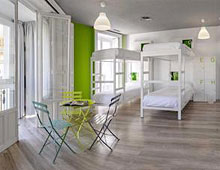 Budget accommodations
  Apartments
  Family Hotel
  Luxury Hotel
  Resorts